Multi-character
More Than One Companion, One App
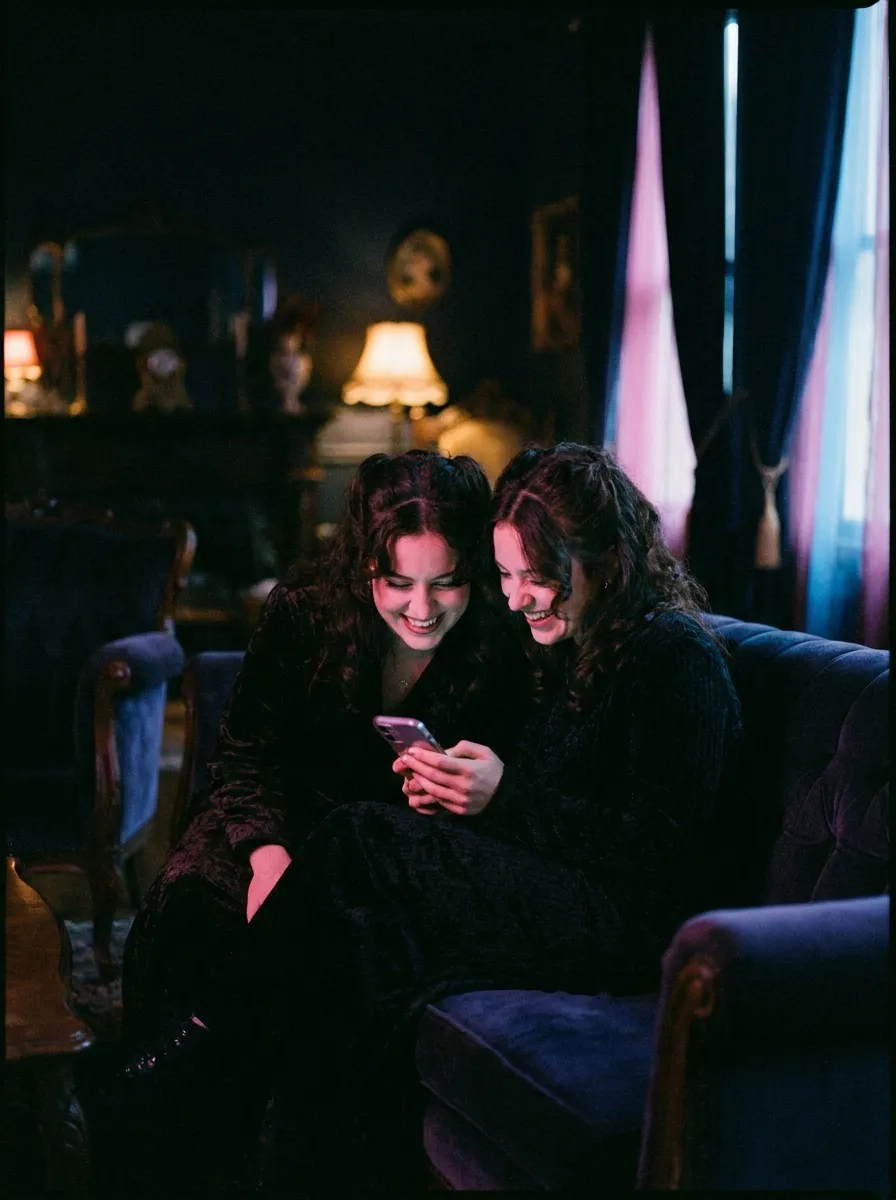
An AI companion app has no structural reason to hold a user to one character. The account carries billing and settings; a persona carries a name, a personality profile, and its own conversation history. Nothing ties those two layers together in a way that forces a single companion, which is why running two or three personas in parallel from one account is a normal use of the product rather than a workaround.
Separate memory, separate coherence
Each persona carries its own context. A generation call retrieves the history attached to the active character and not the others, so a companion written as a stern mentor does not surface a joke made three days earlier inside a separate, playful thread. That separation is what keeps each character usable over months. The personality profile stays the shape it started in, because none of the other threads is being folded back into it.
What sits inside a persona is short and specific: a name, a set of personality traits, a backstory, a voice if one was picked, and the running log of what has been said. Change any of those and the character changes with it. Create a second persona and none of them are shared, which is the whole reason two companions on one account can read as genuinely different rather than as the same model wearing a different avatar.
Why one persona degrades under multiple moods
A single companion asked to cover every register, comfort one night, banter the next, an explicit scene after that, accumulates a history full of contradictory signals. The model answers from that history, so the contradictions surface later as a character that reads slightly off in every register instead of right in one. Splitting the load fixes it at the source: a persona that only ever receives banter-register input keeps producing banter-register output, and a persona built for something else is never asked to switch.
The pattern predates the software. Erving Goffman described how people present a different self depending on the audience and the setting, and the Stanford work of Nick Yee and Jeremy Bailenson on the Proteus effect showed that the identity a person adopts in a mediated environment shapes how they behave inside it. Coverage in The Atlantic has tracked how companion products moved toward catalogs of distinct characters rather than one general-purpose assistant.
The practical limit is not technical. It is how many separate conversations a person actually wants to keep going at once.
Start a second companion
Different persona, different tone, separate history. Same account.
Visit candy.ai →